PDRN and Skin: What Is It and Why Is Everyone Talking About It?
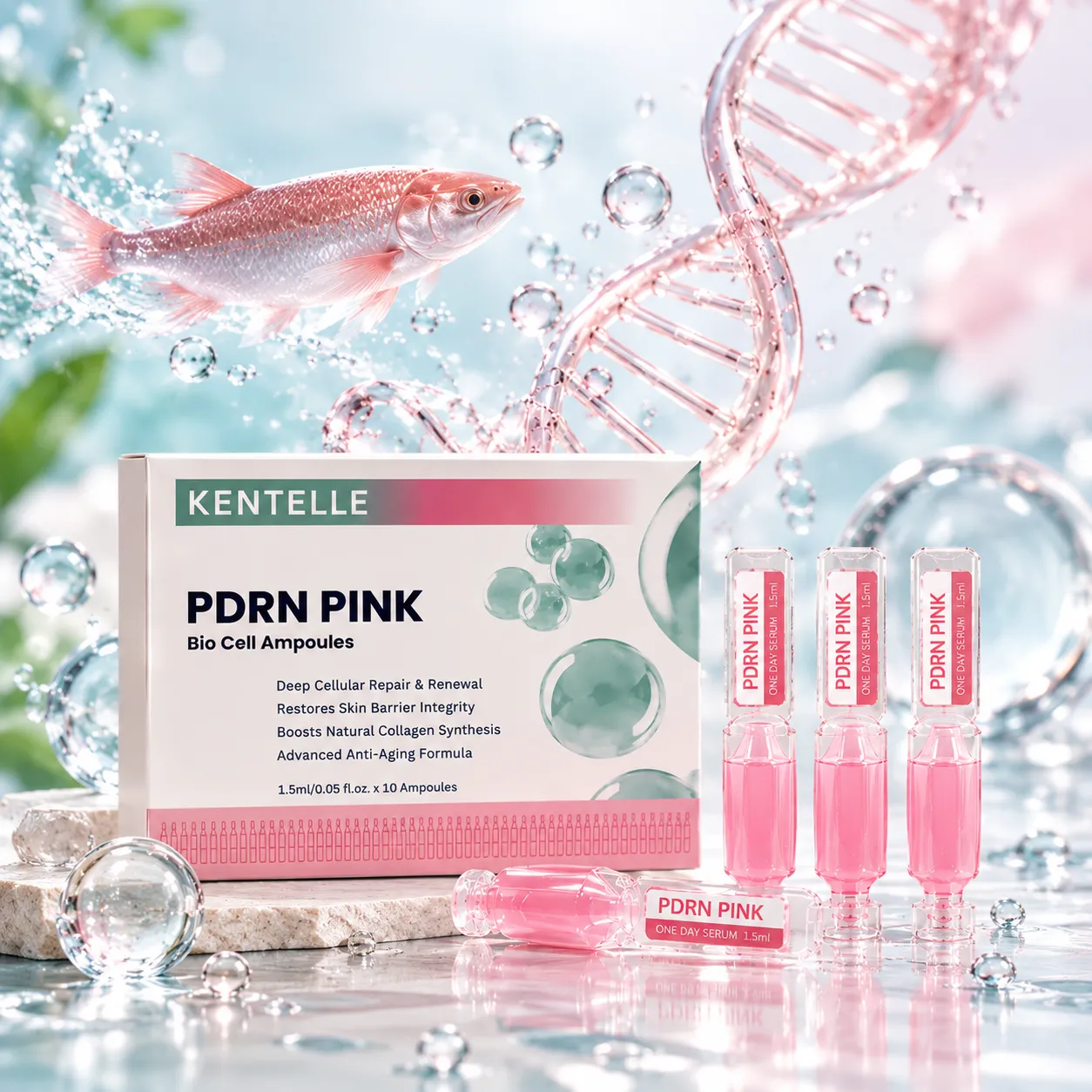
PDRN has become one of the most talked-about ingredients in regenerative skincare and aesthetic treatments.
You may have seen it described as “salmon DNA,” seen it included in skin-rejuvenation treatments, or noticed PDRN appearing in skincare products.
But what exactly is it?
And perhaps more importantly - what does DNA have to do with your skin?
PDRN has a fascinating scientific story. It begins with DNA, but its real interest lies in how these DNA-derived fragments interact with biological pathways involved in repair and regeneration.
Let's take a closer look.
1. What Is PDRN?
PDRN stands for Polydeoxyribonucleotide.
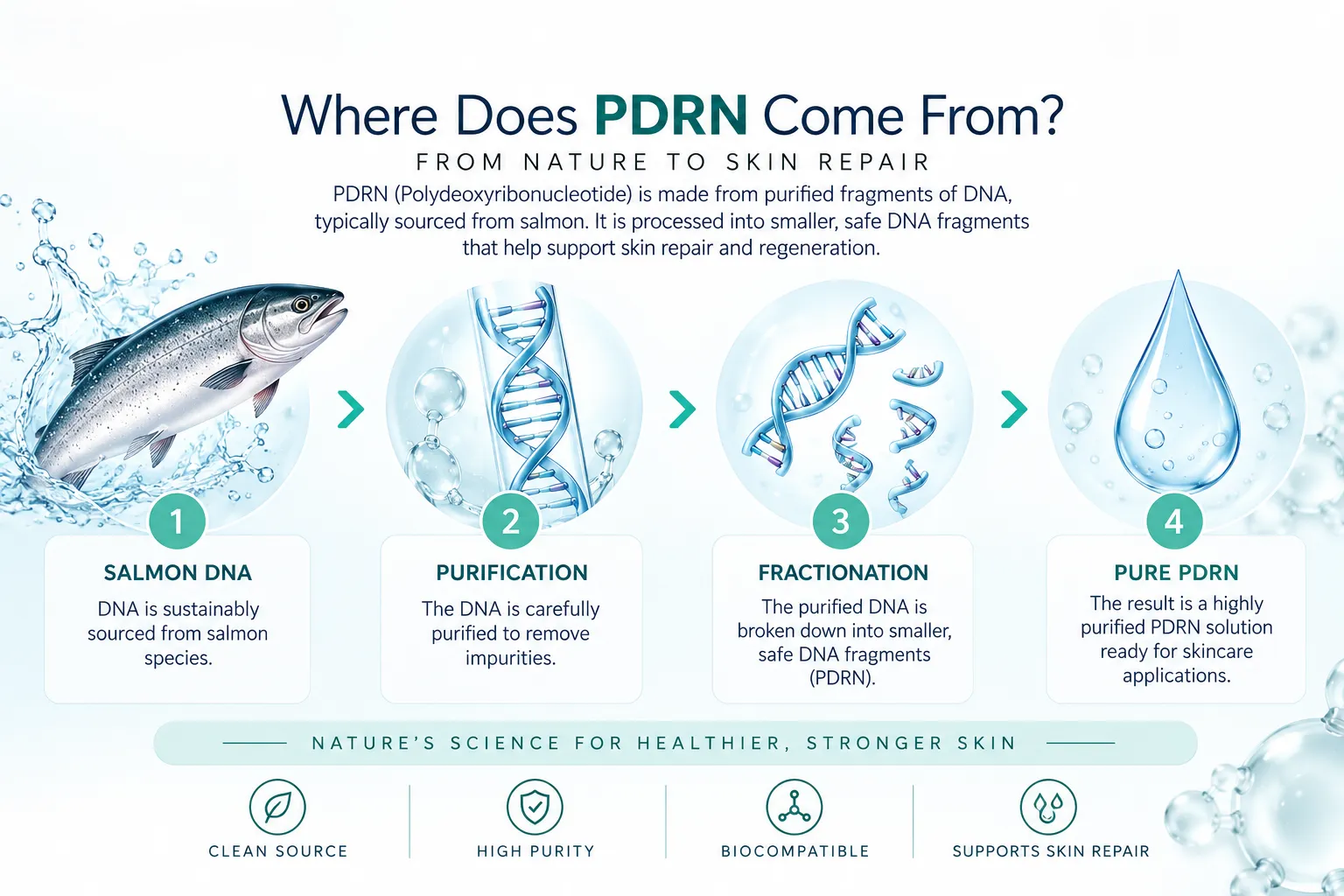
PDRN is made up of small, purified fragments of DNA. Traditionally, PDRN used in medical and aesthetic research has been obtained from highly purified DNA derived from salmonid fish.
This is where the popular description “salmon DNA” comes from.
However, PDRN is more accurately described as a purified DNA-derived material rather than simply “salmon DNA.”
During manufacturing, the source DNA undergoes purification and processing to produce DNA fragments with particular molecular characteristics.
These fragments are what we call PDRN.
2. What Does PDRN Actually Look Like?
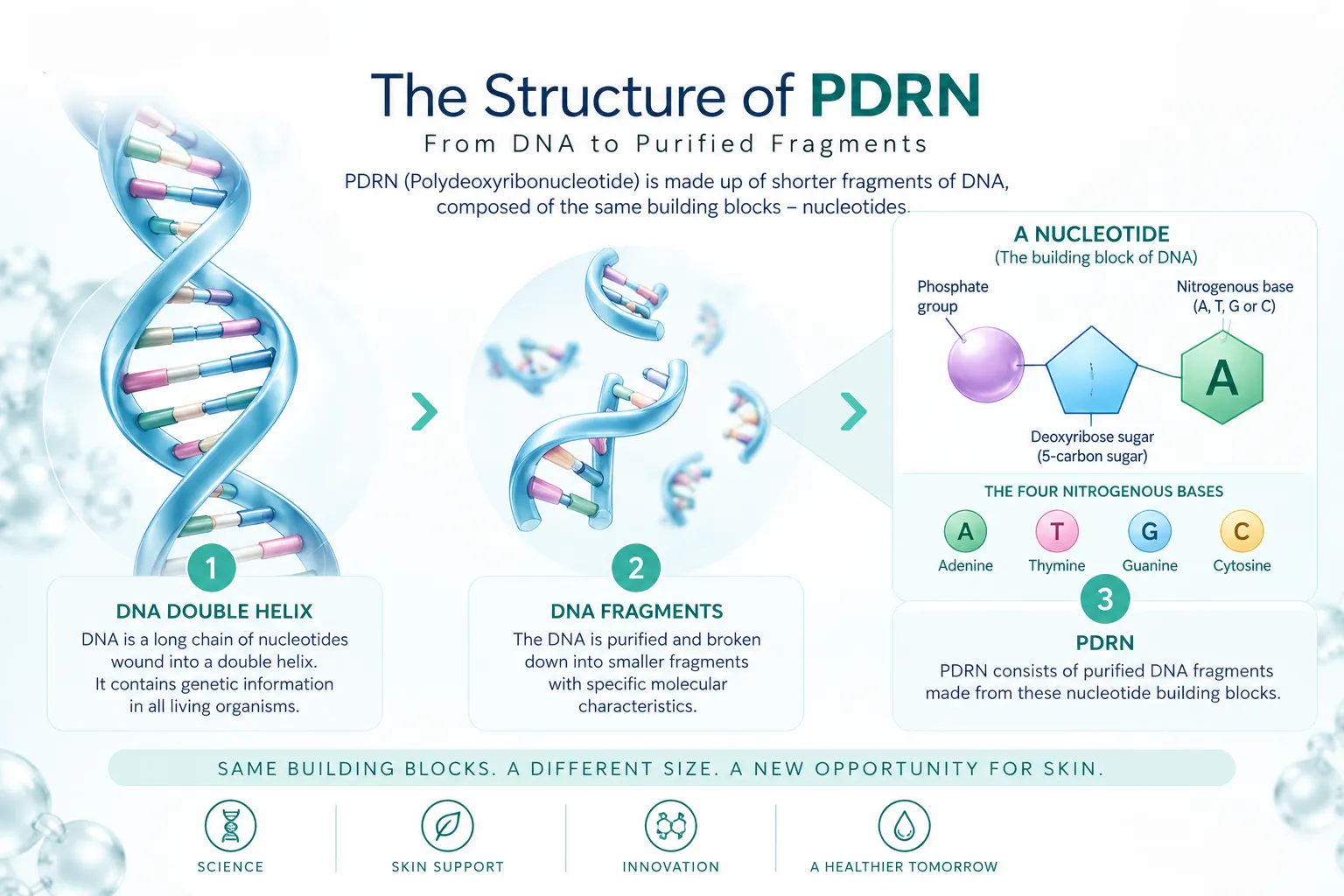
To understand PDRN, it helps to understand DNA.
You have probably seen the familiar double-helix shape of DNA.
DNA is built from smaller units called nucleotides. These building blocks join together to form the familiar DNA double helix.
PDRN comes from this same structure. It consists of purified, shorter fragments of DNA, still made from those same nucleotide building blocks. PDRN and the related term PN (polynucleotide) share a DNA backbone, although their molecular size and chain length can differ.
The size and characteristics of these fragments can vary between PDRN preparations, which is one reason the quality and formulation of a PDRN product matter.
The diagram below shows how we move from the familiar DNA double helix to the smaller fragments that make up PDRN.
Now that we know what PDRN is made from, the more interesting question is: what does it actually do?
3. So, What Does PDRN Actually Do?
This is where PDRN becomes particularly interesting.
Our skin is constantly renewing itself. When it is stressed or damaged, the body activates a series of natural processes to repair and rebuild the affected tissue. Much of the research around PDRN has focused on tissue repair and regeneration.
When skin is damaged, the body begins a highly organised healing process involving inflammation, new cells, blood vessels, fibroblasts and the rebuilding of tissue.
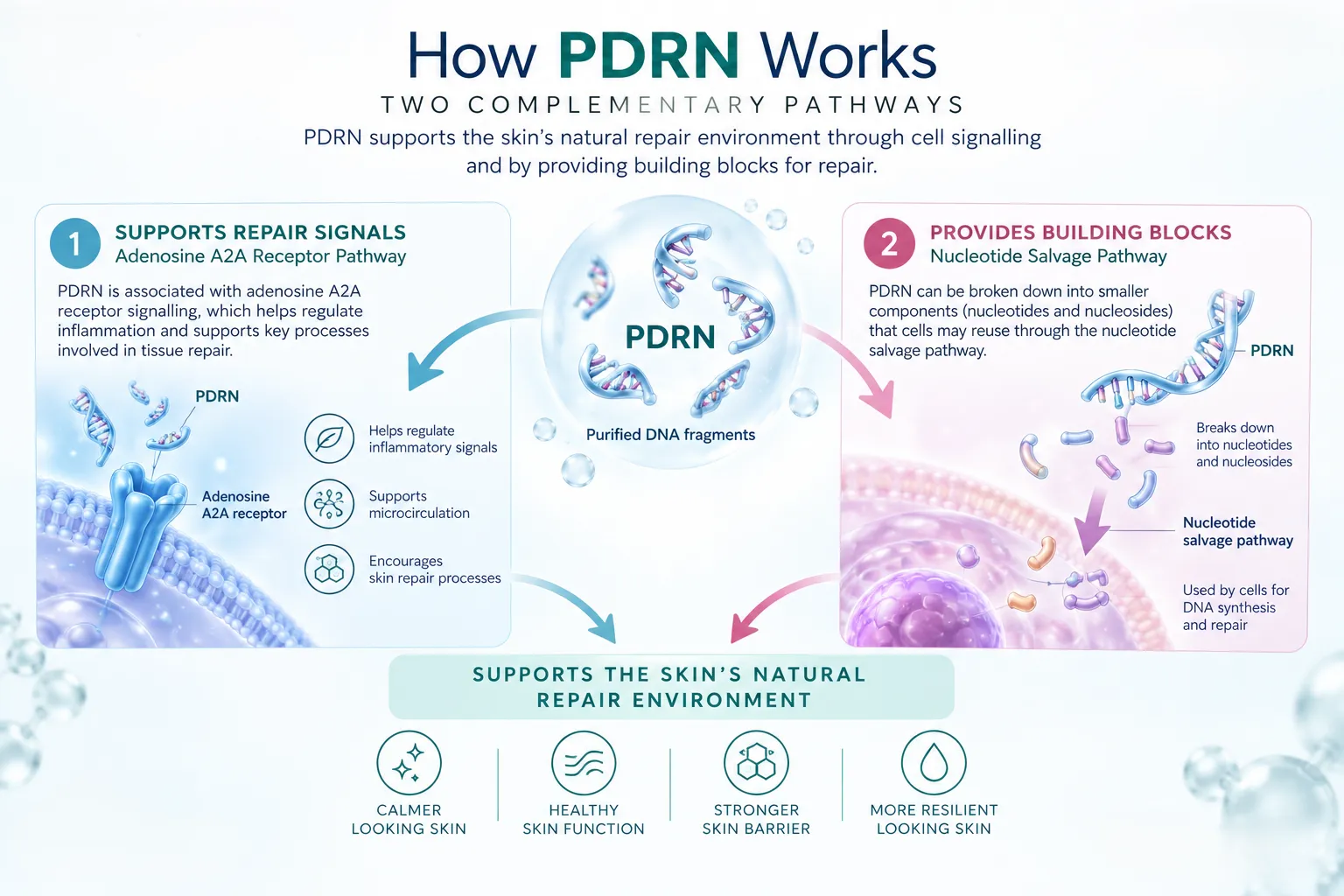
PDRN appears to interact with some of these natural repair processes. Research has particularly focused on two mechanisms: adenosine A2A receptor activity and the nucleotide salvage pathway.
Supporting repair signals
One pathway involves something called the adenosine A2A receptor.
Think of receptors as tiny communication points on cells. This particular pathway is involved in processes such as inflammation control, circulation and tissue repair.
Providing building blocks for repair
PDRN can also be broken down into smaller components that cells may reuse when they need to build new DNA.
This recycling process is known as the nucleotide salvage pathway.
In simple terms, one pathway is about supporting the signals involved in repair, while the other helps provide building blocks that repairing cells can reuse.
And this is one of the reasons PDRN has attracted so much interest in skin repair and regenerative medicine.
4. What Can This Mean for Your Skin?
The word “regeneration” is used frequently in skincare. But skin regeneration isn't one single event.
Our skin is constantly renewing itself. When it becomes stressed or damaged, many processes work together to help it recover.
Cells communicate. New skin cells are formed. The skin barrier is rebuilt. And deeper within the skin, fibroblasts help maintain the supporting structure of the tissue.
This is where PDRN becomes interesting.
As we saw in the previous section, PDRN is associated with biological pathways involved in repair and recovery. Research has explored PDRN in areas such as tissue repair, wound healing and skin regeneration.
For skincare, this has created particular interest in PDRN for skin that is:
Recovering • Stressed • Compromised • Mature • In need of additional support
PDRN doesn't need to replace the ingredients you may already know and use.
Different skincare ingredients have different jobs.
Hyaluronic acid is primarily used to support hydration.
Ceramides help support the skin barrier.
Peptides are used for a variety of skin-conditioning and signalling functions.
PDRN is particularly interesting because of the research surrounding skin repair and recovery processes.
And these ingredients can complement one another.
A good skincare routine isn't about finding one ingredient that does everything. It is about giving the skin the right support at the right time.
What does the research say?
Research into PDRN is encouraging, particularly in the area of tissue and wound repair. There is also growing interest in its aesthetic and skincare applications.
However, the research is still developing. Different studies use different PDRN preparations, concentrations and methods of delivery, so we should be careful about assuming that every PDRN product will behave in exactly the same way.
That's an important distinction, and one we'll come back to when we discuss professional treatments.
So the next question becomes much more practical:
5. When Should You Use PDRN?
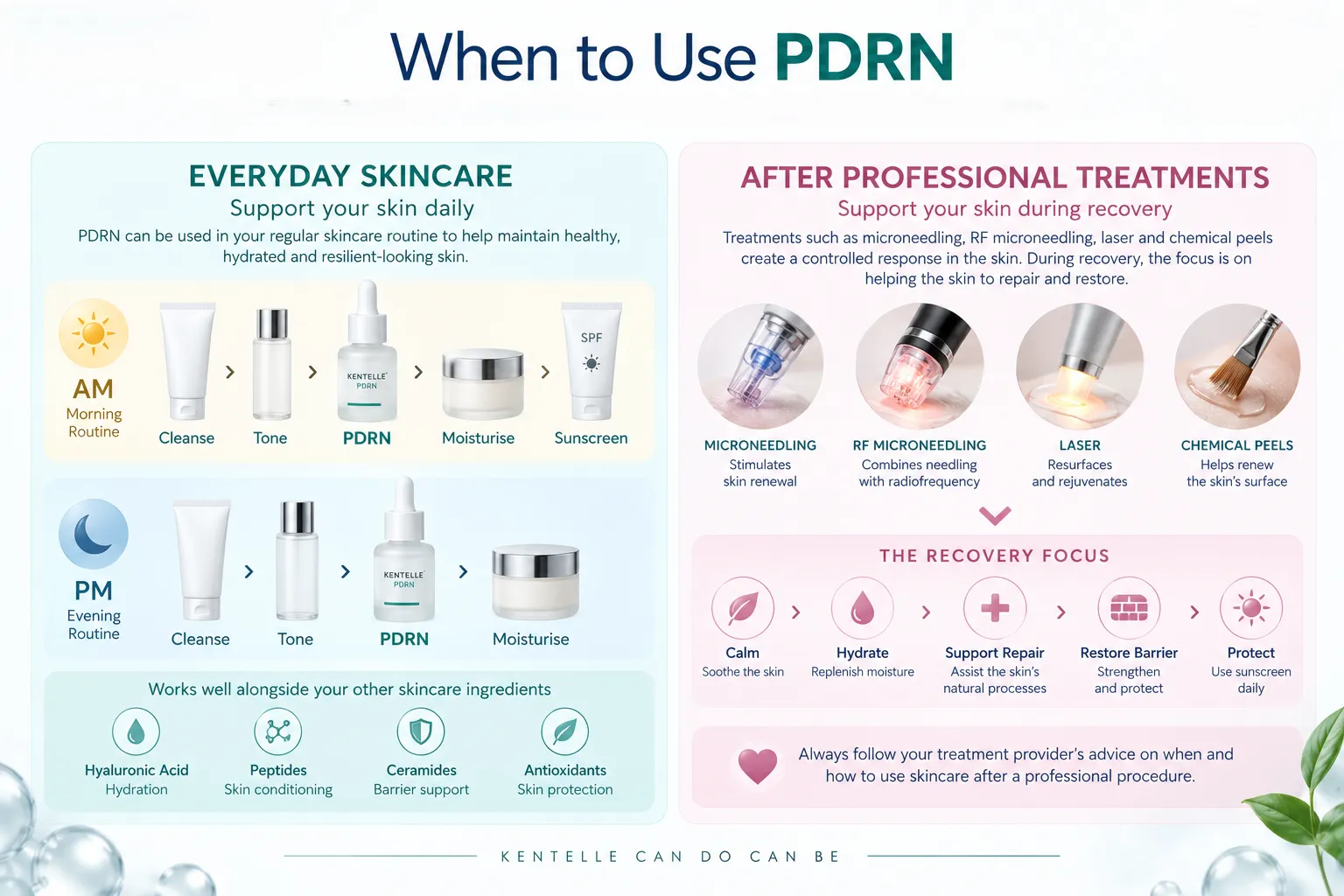
PDRN can have a place in both everyday skincare and post-treatment skin care, but these are two different situations.
PDRN in Your Everyday Routine
You don't need to wait until your skin is damaged to use PDRN.
In everyday skincare, PDRN can be considered when the skin needs additional support, particularly when it feels dry, stressed, compromised or less resilient, or when you simply want to support healthy-looking skin as it matures.
Where PDRN fits into your routine will depend on the type of product and its formulation.
For a lightweight serum or concentrate, a typical routine might look like:
Morning
Cleanse → Tone → PDRN → Moisturiser → Sunscreen
Evening
Cleanse → Tone → PDRN → Moisturiser
PDRN can also sit comfortably alongside familiar ingredients such as hyaluronic acid, peptides and barrier-supporting moisturisers.
The idea isn't to make your routine more complicated. It is to give different ingredients a clear purpose.
What About After a Professional Treatment?
This is where PDRN becomes particularly interesting.
Treatments such as microneedling, RF microneedling, certain lasers and chemical peels deliberately create a controlled response in the skin.
Afterwards, the skin begins its natural recovery process.
During this period, the priorities usually shift away from strong corrective skincare and towards:
Calming → Hydrating → Supporting repair → Restoring the barrier → Protecting
Because of the research surrounding PDRN and tissue repair, there is growing interest in its use as part of post-procedure skin care.
However, freshly treated skin is different from intact skin. The timing and choice of products after a procedure should always follow the treatment provider's instructions.
We'll look more closely at why this matters in the next section.
6. PDRN and Clinical Treatments
PDRN has become increasingly associated with professional skin treatments, particularly microneedling and RF microneedling.
Why?
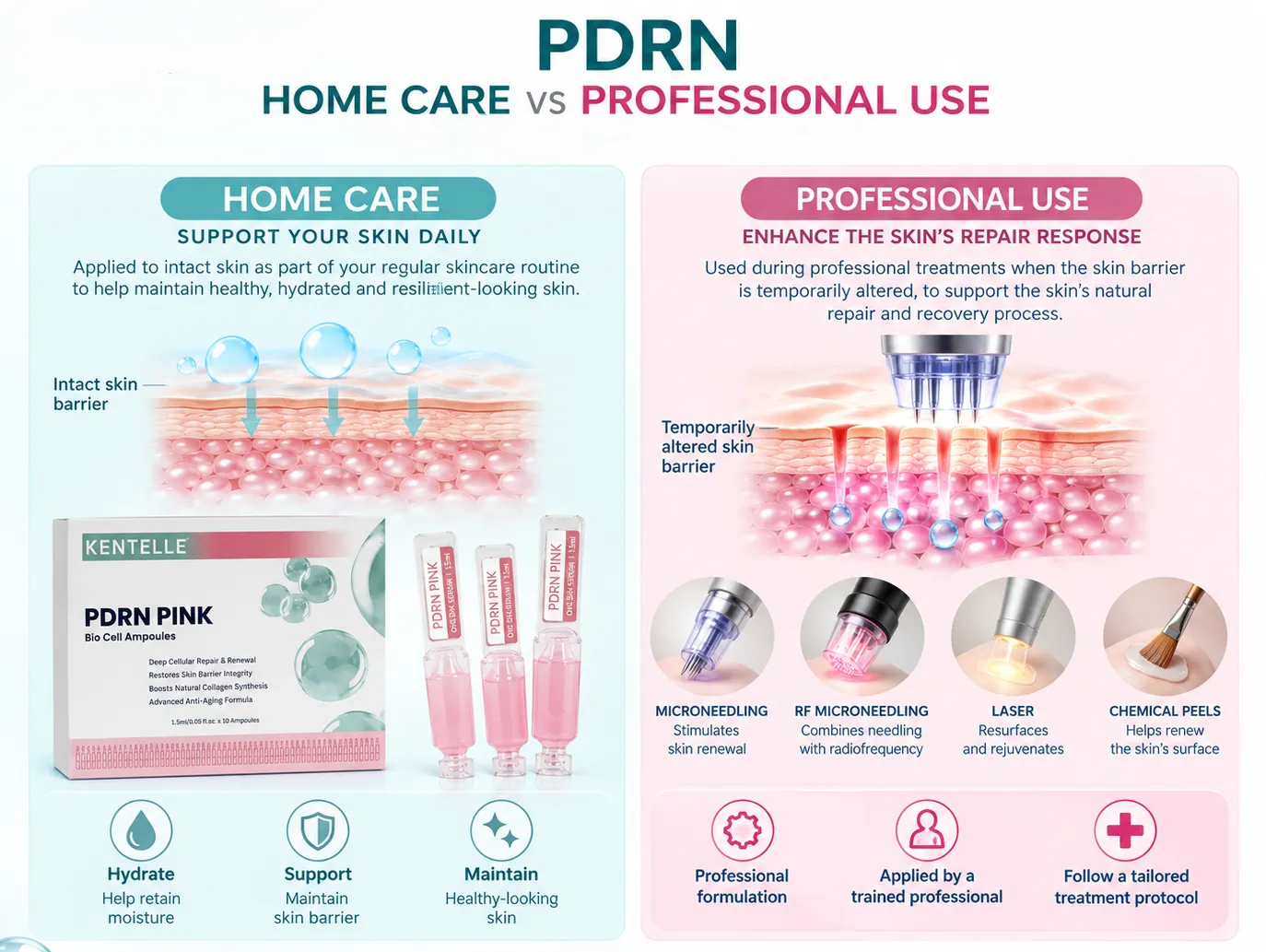
Treatments like these create controlled microchannels in the skin and trigger the body's natural repair response. This is very different from applying skincare to an intact skin surface.
It also means that how a PDRN product is used becomes especially important.
PDRN + Microneedling
Microneedling uses very fine needles to create controlled microchannels in the skin.
These microchannels stimulate the skin's natural healing response and can temporarily change how ingredients pass through the skin barrier.
This is one reason there is growing interest in combining regenerative treatments with ingredients such as PDRN.
PDRN + RF Microneedling
RF microneedling takes this a step further.
The needles create controlled microchannels while radiofrequency energy delivers heat into targeted layers of the skin, stimulating a repair and remodelling response.
PDRN is of particular interest around these treatments because, as we learned earlier, its biological activity has been studied in relation to tissue repair and recovery.
However, this does not mean that any PDRN skincare product should be used during microneedling or RF microneedling.
Why the Product Matters
Once the skin barrier has been deliberately disrupted, applying a product is very different from applying it to intact skin.
A product intended for professional use needs to be considered in relation to its formulation, quality, sterility, intended use and compatibility with the treatment protocol.
The device manufacturer's instructions and the treating professional's protocol also matter.
This is why home-care PDRN and professional PDRN should not automatically be treated as interchangeable, even though both may contain PDRN.
Research into PDRN alongside aesthetic procedures is developing, but there is not yet one universally established protocol for the ideal concentration, timing or method of delivery.
So rather than asking:
“What is the strongest PDRN?”
a better question is:
“Is this PDRN product appropriate for how it is being used?”
7. Meet Kentelle PDRN Pink
Now that we understand the science behind PDRN, where does Kentelle PDRN Pink fit into your skincare routine?
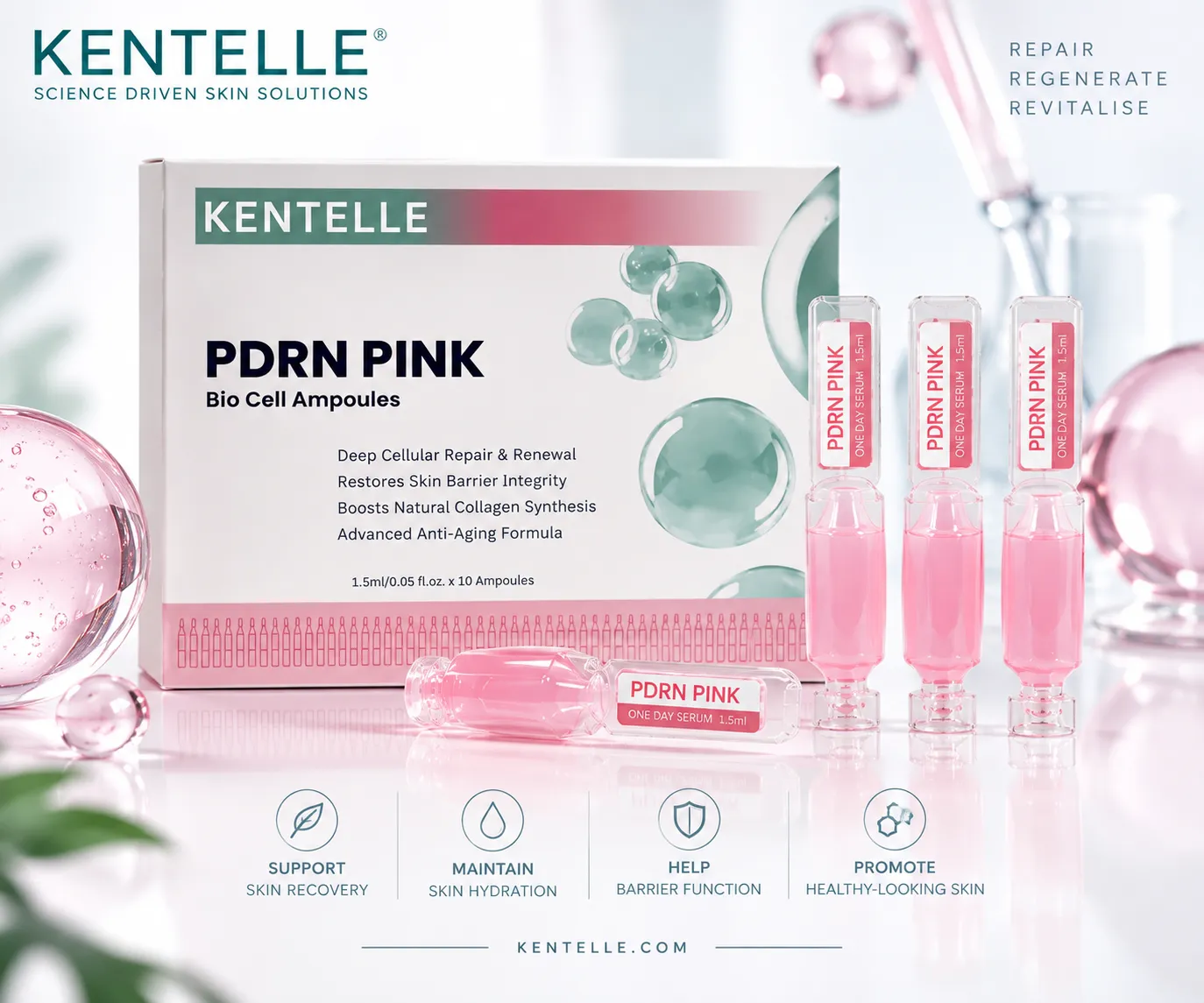
Kentelle PDRN Pink comes in individual Bio Cell Ampoules, designed to make PDRN easy to incorporate into your home skincare routine.
Our approach to PDRN is simple: it is not intended to replace everything else your skin needs.
Instead, PDRN can become part of a balanced routine that also considers hydration, barrier support, moisturisation and daily sun protection.
Who May Consider PDRN?
Kentelle PDRN Pink may be particularly interesting for skin that feels:
Stressed • Dry • Mature • Less resilient • In need of additional skin support
It can also be considered as part of a carefully planned post-treatment home-care routine, once your treating professional advises that it is appropriate to introduce your normal skincare products again.
How Does It Fit Into Your Routine?
For everyday home care, follow the directions supplied with your Kentelle product.
As a general skincare principle, lighter products are usually applied before heavier creams:
Cleanse → Tone → PDRN → Moisturise
And in the morning, always finish with:
Sunscreen
PDRN can also be used within a routine containing familiar supportive ingredients such as hyaluronic acid, peptides and ceramides, depending on your individual skin needs and the complete formulations being used.
What About Professional Treatments?
This is where I would make the distinction very clear.
Kentelle PDRN Pink should be used according to its intended product directions.
As we explained earlier, products used during microneedling, RF microneedling or other procedures that temporarily disrupt the skin barrier have different requirements from everyday home skincare.
A product should only be used professionally in this way when its formulation and intended use are appropriate for that treatment protocol.
That distinction allows us to talk about the exciting science of PDRN without assuming that every PDRN product is suitable for every method of application.
The Kentelle Takeaway
PDRN may have a complicated name, but once we understand the science behind it, the idea becomes much clearer.
It is made from purified fragments of DNA, built from the same nucleotide building blocks found naturally in DNA.
What makes PDRN particularly interesting is its connection with the body's natural repair and recovery processes. Research suggests it may support signalling involved in tissue repair while also providing smaller components that cells can reuse through the nucleotide salvage pathway.
But PDRN isn't a miracle ingredient — and it doesn't need to be.
Healthy-looking skin still depends on the fundamentals:
• Maintain hydration.
• Support the skin barrier.
• Protect your skin from the sun.
• Use active ingredients appropriately.
• And give your skin the support and time it needs to recover.
PDRN simply adds another interesting tool to that approach, particularly when repair, recovery and skin resilience are the goal.
And as the science around PDRN continues to develop, we believe the most important thing is not simply following the latest skincare trend.
It is understanding what you are putting on your skin, why you are using it, and where it belongs in your routine.
Because good skincare isn't about doing more.
It's about understanding your skin and giving it what it needs.