Rosacea: Why Your Skin Turns Red, Reactive and Acne-Like
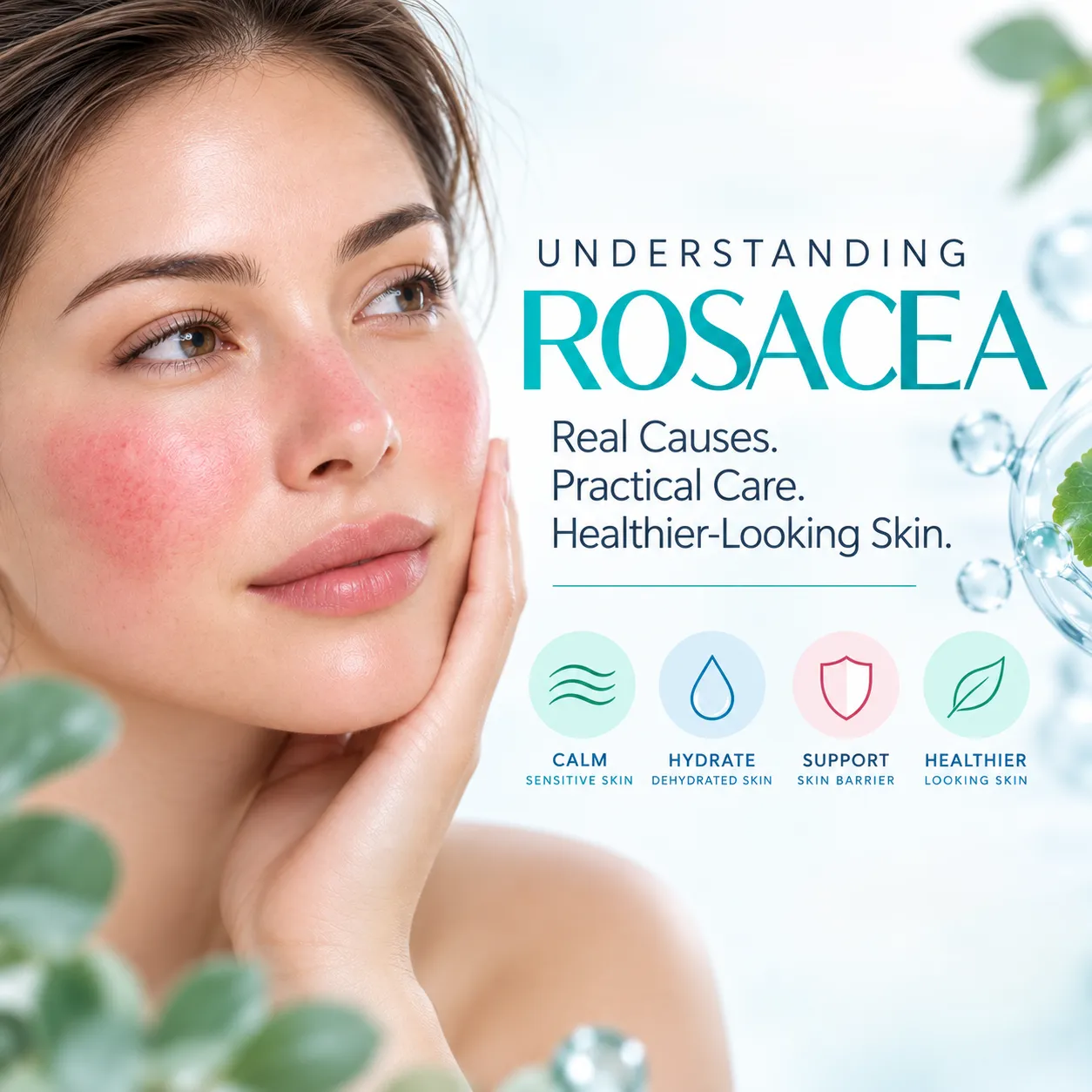
Rosacea is often mistaken for acne, sensitive skin or even an allergic reaction.
It can begin with something as simple as facial flushing, perhaps after being in the sun, exercising, drinking something hot or eating spicy food. But over time, some people notice that the redness lasts longer. Tiny blood vessels may become more visible, the skin can feel hot or sensitive, and small red bumps or pustules may appear.
This is where rosacea can become confusing: it can look like acne, but it is not the same condition.
Understanding what is happening beneath the surface of the skin can help explain why rosacea needs a particularly gentle approach.
What Is Rosacea?
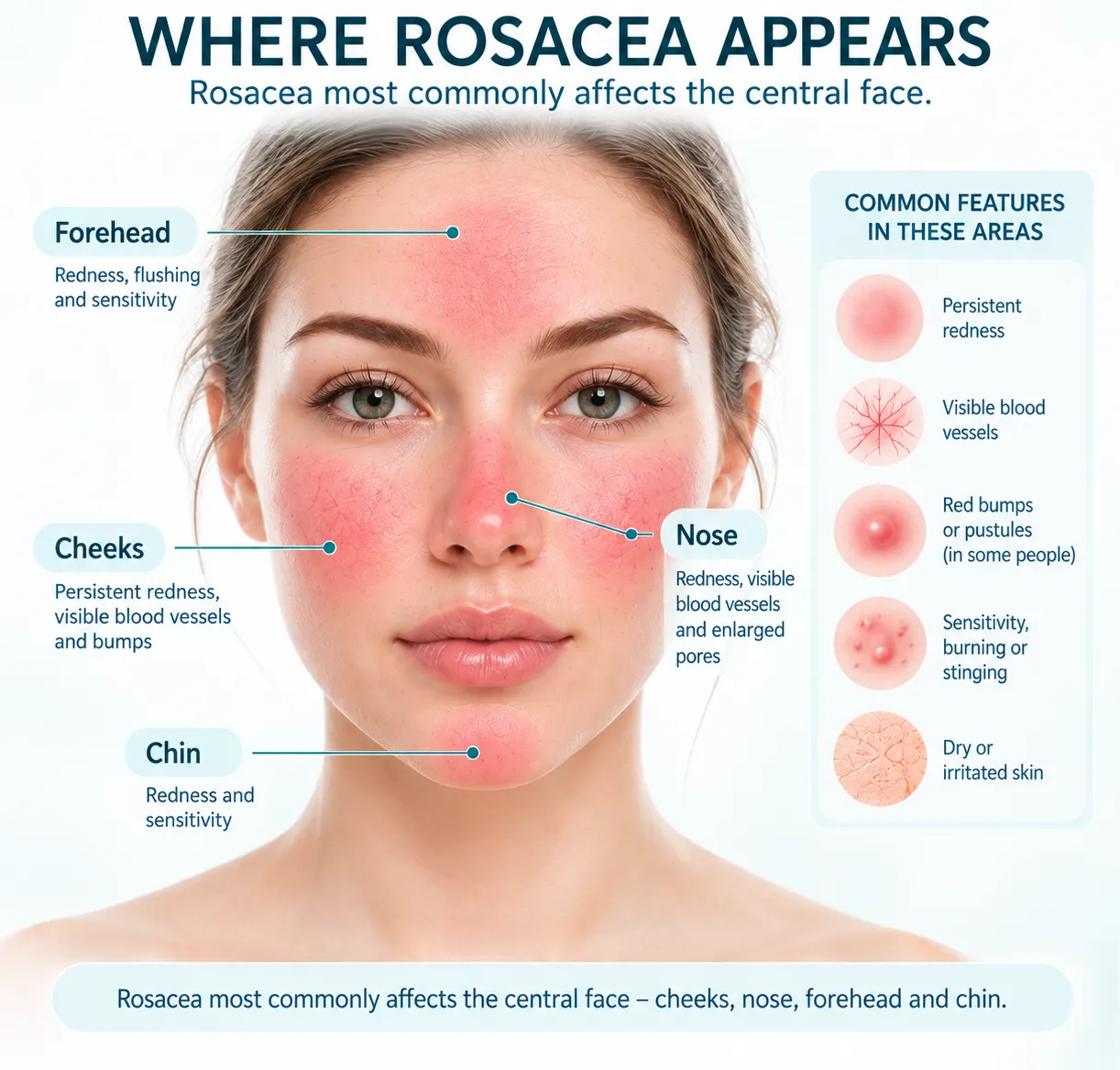
Rosacea is a chronic inflammatory skin condition that primarily affects the central area of the face.
It commonly appears across the:
Cheeks • Nose • Forehead • Chin
Depending on the person, rosacea may cause persistent redness, frequent flushing, visible small blood vessels, burning or stinging, sensitivity, dryness and acne-like bumps or pustules.
Importantly, rosacea is not caused by poor hygiene, and simply cleansing the skin more aggressively will not make it disappear. In fact, excessive cleansing or harsh exfoliation can make sensitive rosacea-prone skin feel worse.
What Is Actually Happening in Rosacea-Prone Skin?
Rosacea isn't simply “red skin.”
Several processes appear to be involved, including changes in inflammation, blood-vessel responses, the nervous system and the skin's barrier.
Think of rosacea-prone skin as having an over-responsive alarm system.
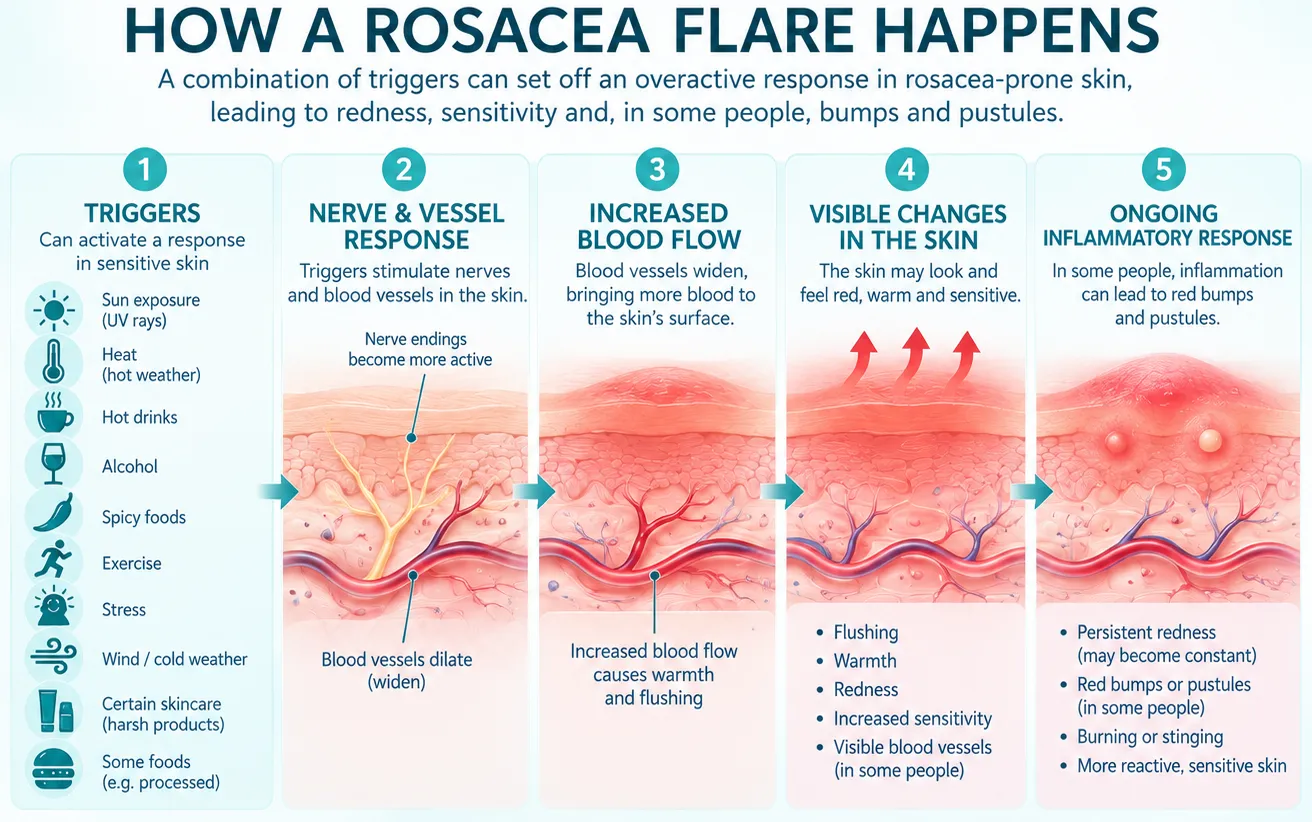
When this happens repeatedly, redness may become more persistent and tiny facial blood vessels may become increasingly noticeable.
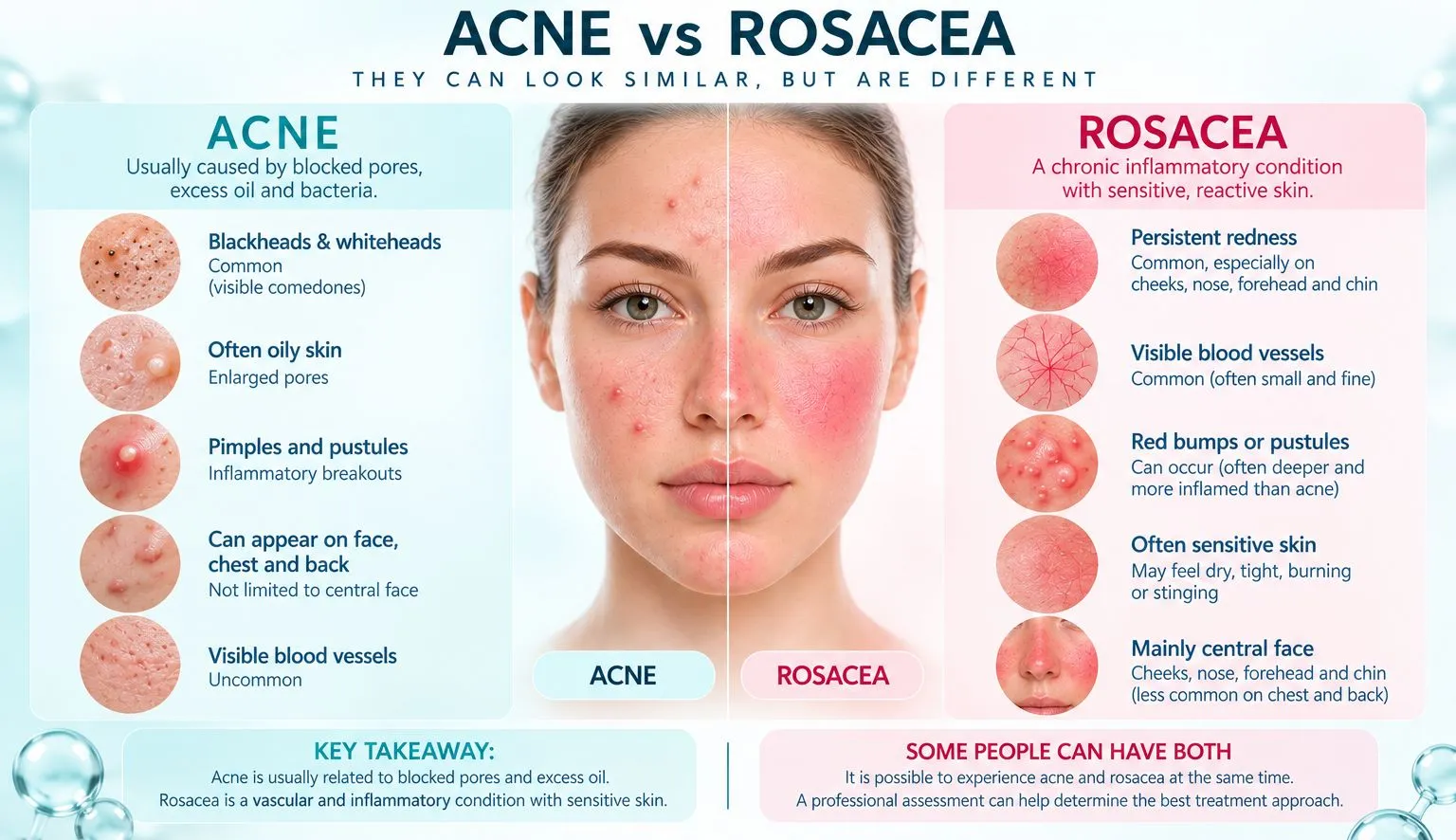
Rosacea or Acne? They Can Look Surprisingly Similar
One form of rosacea, papulopustular rosacea, can produce red bumps and pus-filled spots that look very much like acne.
But there is an important difference.
Acne usually involves the hair follicle becoming blocked by oil and dead skin cells. This is why blackheads and whiteheads (comedones) are characteristic signs of acne.
Rosacea generally does not produce comedones.
Instead, look for a combination of:
persistent redness + flushing + sensitivity + visible blood vessels + red bumps or pustules.
The location also provides clues. Rosacea tends to concentrate around the cheeks, nose, forehead and chin, whereas acne may occur on the face as well as the chest, shoulders and back.
And importantly, a person can have both acne and rosacea at the same time.
Rosacea Does Not Look the Same in Everyone
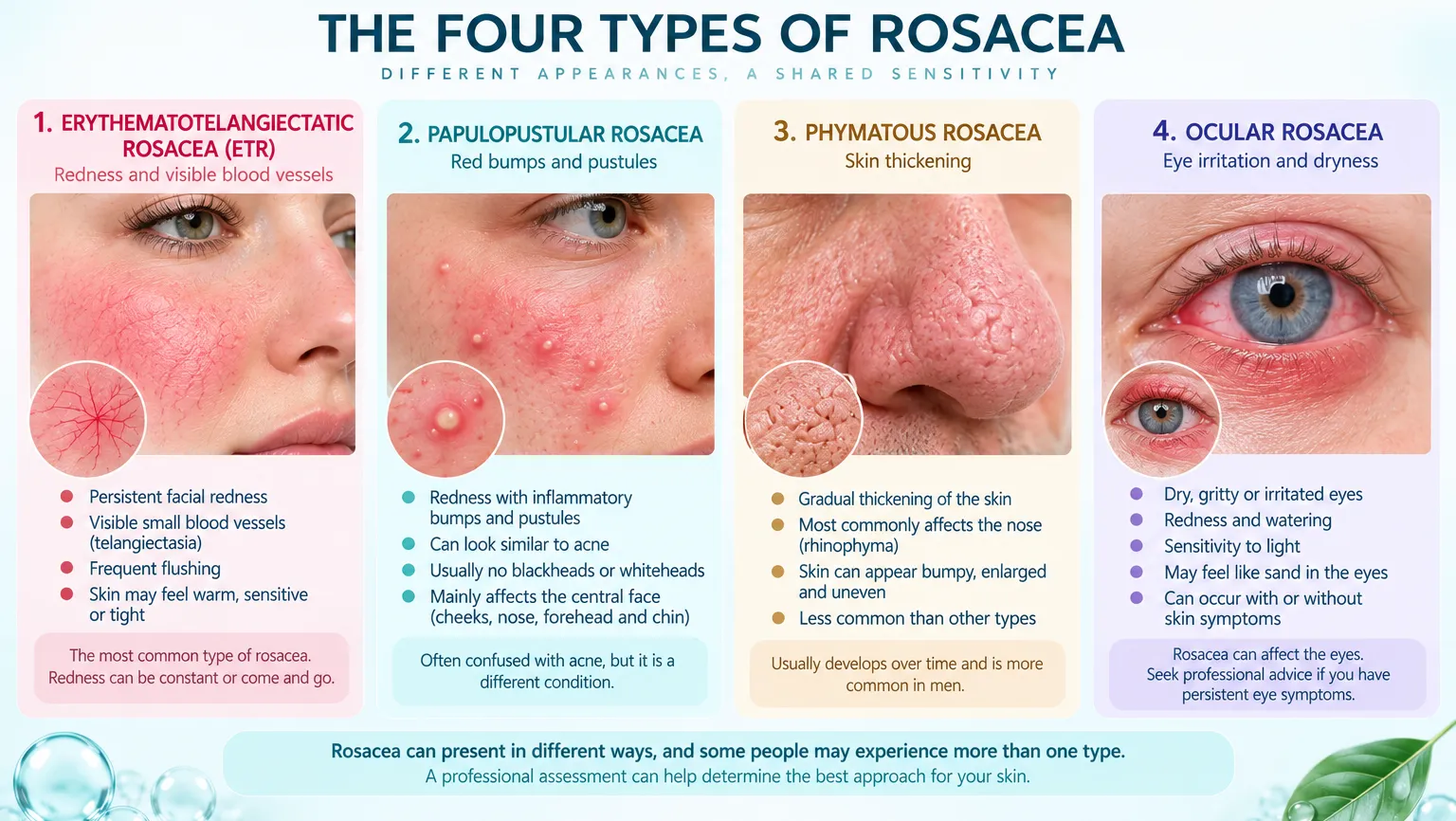
Rosacea can present in several different ways.
Some people mainly experience redness and visible blood vessels. Others develop acne-like bumps and pustules. In some cases, the skin can gradually thicken, particularly around the nose, while rosacea can also affect the eyes.
Four Common Presentations
Erythematotelangiectatic rosacea
Mainly persistent facial redness, flushing and visible small blood vessels.
Papulopustular rosacea
Redness accompanied by inflammatory bumps and pustules. This is the form most easily confused with acne.
Phymatous rosacea
The skin gradually becomes thicker and more irregular, most commonly around the nose.
Ocular rosacea
Rosacea involving the eyes, which may feel dry, gritty, irritated, watery or red.
Why Does Rosacea Suddenly Flare?
One of the frustrating things about rosacea is that skin can seem relatively calm one day and noticeably red the next.
This is because triggers differ between individuals.
For one person, sunlight may be the biggest problem. For another, it may be heat, alcohol or a particular skincare ingredient.
The objective isn't necessarily to avoid everything on the list below. Instead, learn your own skin's pattern.
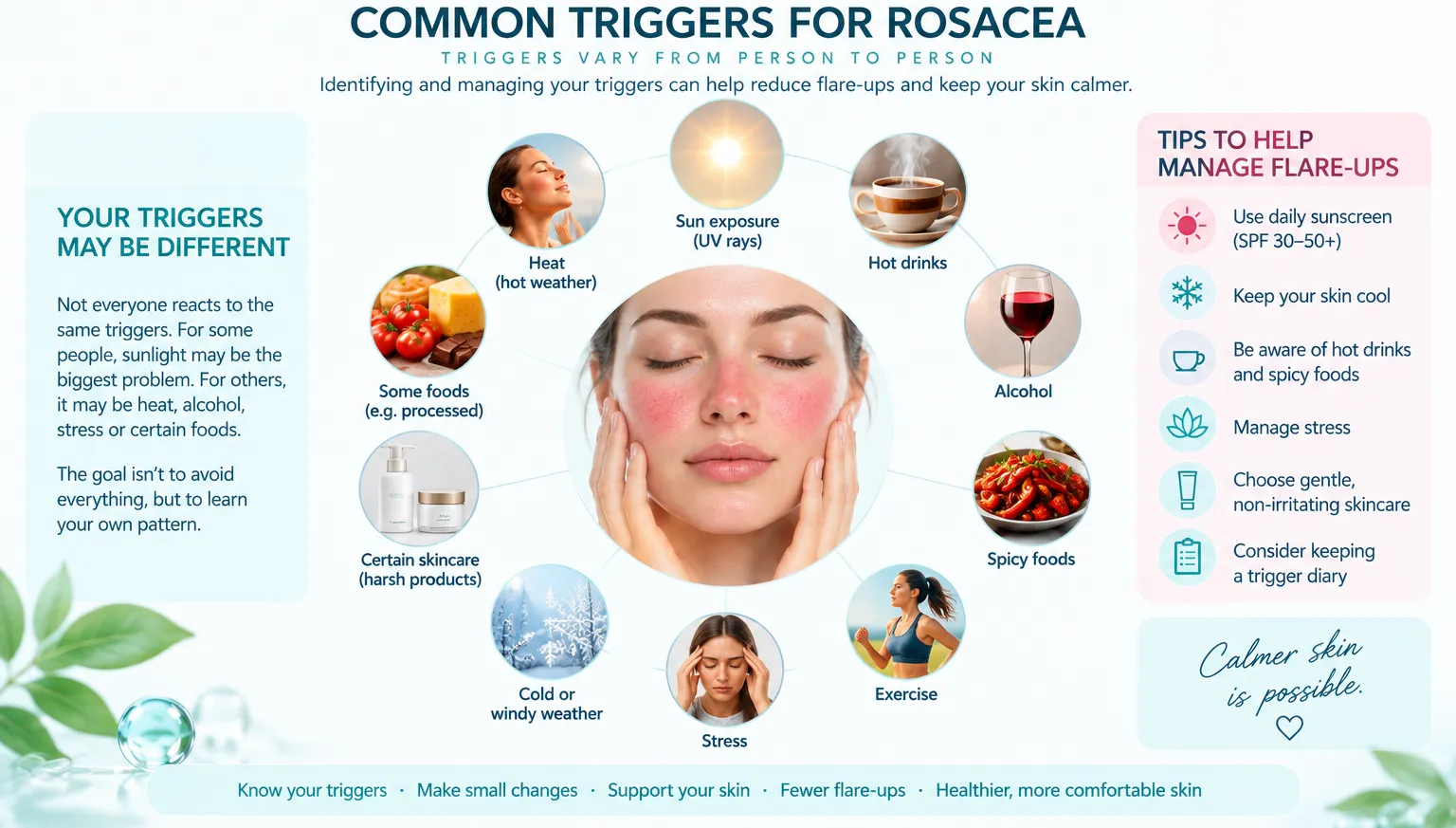
A simple trigger diary can be surprisingly useful. If redness repeatedly appears after the same activity, environment or product, you've identified something worth managing.
Why the Skin Barrier Matters
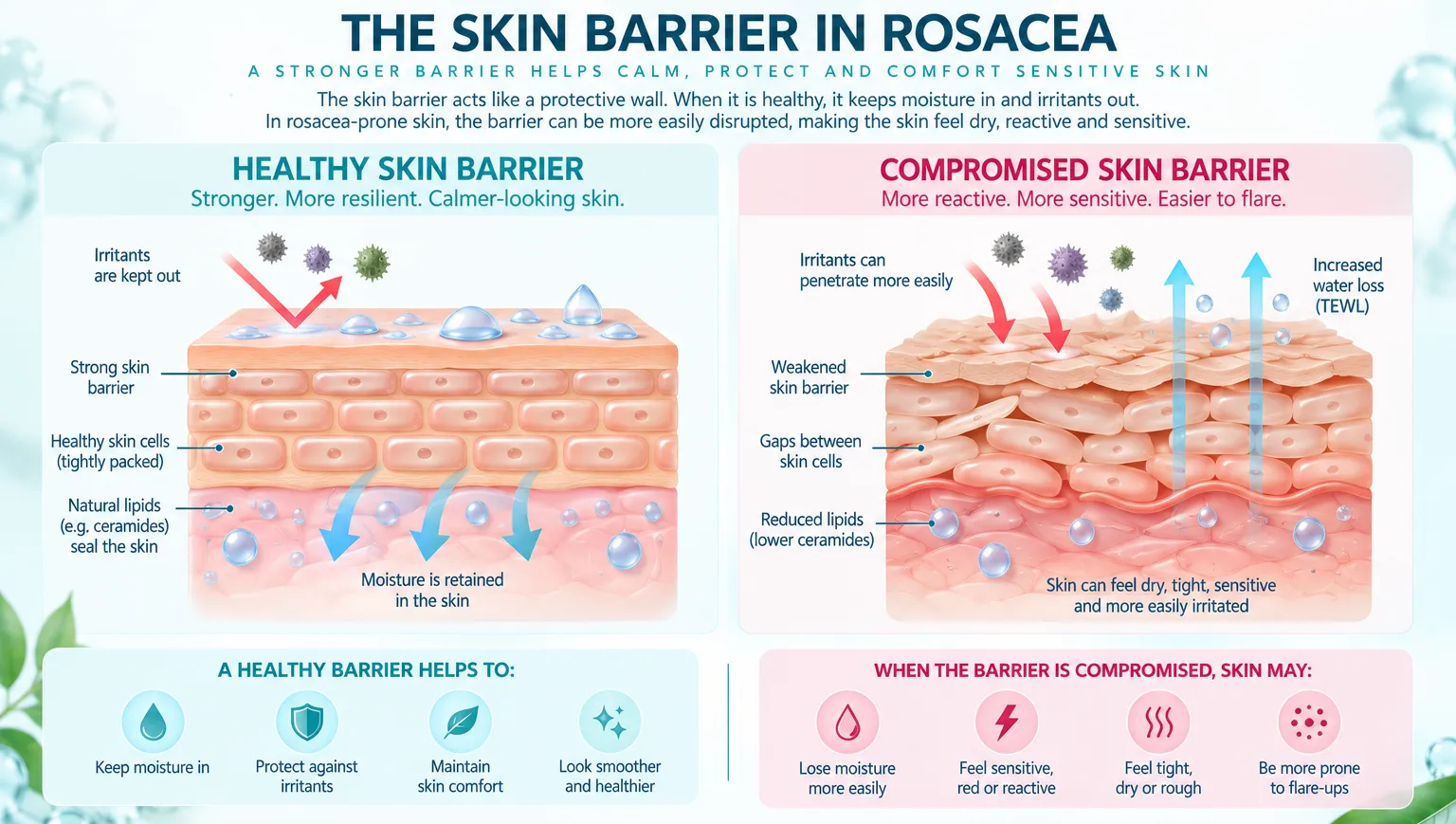
The outermost layer of our skin acts like a protective wall.
Healthy skin cells form the “bricks,” while natural lipids, including ceramides, help form the material between them.
Together, they help keep moisture inside and irritants outside.
When this barrier isn't functioning optimally, the skin can lose moisture more easily and become more vulnerable to environmental irritants. For someone whose skin is already reactive, this can contribute to feelings of dryness, tightness, stinging and discomfort.
This is why rosacea-prone skin often benefits from skincare that focuses less on aggressive correction and more on hydration, comfort and barrier support.
Caring for Rosacea-Prone Skin
With rosacea, stronger doesn't necessarily mean better.
A simple routine is often preferable:
1. Cleanse
Use a mild cleanser and lukewarm water. Avoid aggressive scrubbing.
2. Calm & Hydrate
Use gentle hydrating products appropriate for sensitive skin: Hydrating toner or essence - look for calming ingredients such as niacinamide (vitamin B3) and panthenol (vitamin B5).
3. Support the Barrier
Moisturising ingredients such as ceramides and other barrier-supporting lipids can help maintain hydration and skin comfort.
4. Protect
Daily broad-spectrum sunscreen is particularly important because UV exposure is a common rosacea trigger.
Strong exfoliating acids, abrasive scrubs and multiple active ingredients should be approached carefully, particularly when the skin is already experiencing a flare.
Where Kentelle Fits In
For rosacea-prone or easily irritated skin, the Kentelle philosophy is to focus first on gentle cleansing, hydration, soothing care and supporting a healthy skin barrier.
The aim is not to overwhelm sensitive skin with too many active ingredients, but to build a simple, supportive skincare routine according to individual skin tolerance.
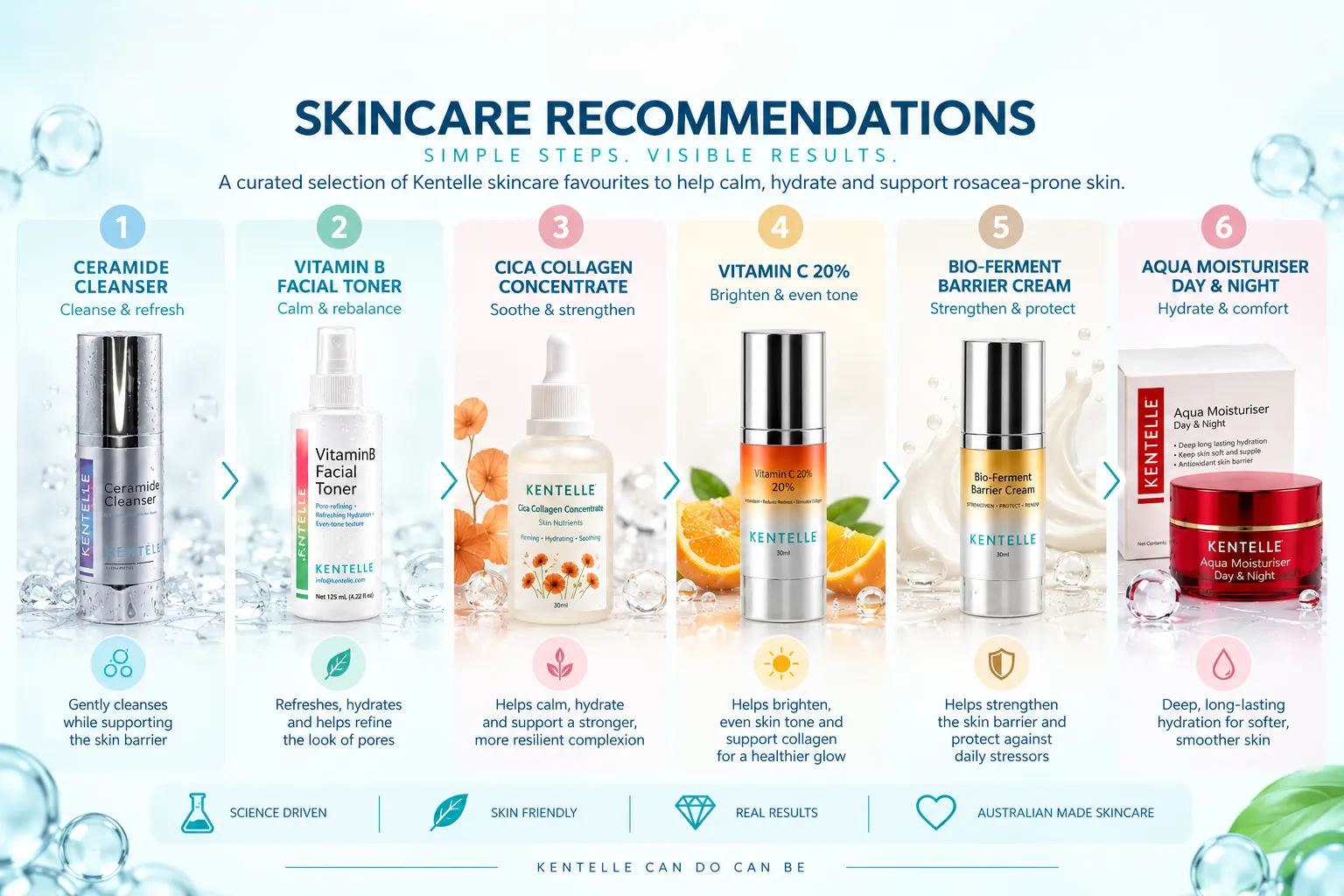
1. Ceramide Cleanser
A gentle first step to cleanse the skin while helping maintain its natural protective barrier.
2. Vitamin B Facial Toner
A refreshing, hydrating step to help leave the skin feeling calm and comfortable after cleansing.
3. Cica Collagen Concentrate
A soothing and hydrating concentrate designed to support skin comfort and a healthier-looking, more resilient complexion.
4. Vitamin C 20% (Morning)
Provides antioxidant support and helps brighten the appearance of dull, uneven-looking skin. For rosacea-prone or reactive skin, introduce gradually and monitor tolerance.
5. Bio-Ferment Barrier Cream (Evening)
Focuses more on hydration, comfort and supporting the skin barrier, making it particularly useful when the skin feels dry, stressed or sensitive.
Vitamin C and Bio-Ferment Barrier Cream can be alternated according to the skin's needs and tolerance. On days when the skin feels particularly reactive or is experiencing a flare, prioritise gentle hydration and barrier support rather than Vitamin C.
6. Aqua Moisturiser
Use for additional hydration to help keep the skin feeling soft, supple and comfortable. It can be incorporated according to how much additional moisture the skin needs.
A gentle approach is key. Introduce new products gradually and one at a time, particularly when skin is sensitive or reactive. During an active flare, keep the routine simple rather than introducing multiple new products or strong active ingredients.
What About Professional Treatment?
Skincare can help support and care for rosacea-prone skin, but rosacea is a medical skin condition and may sometimes require professional treatment.
Depending on the type and severity of symptoms, a doctor or dermatologist may recommend prescription topical or oral treatments.
For persistent facial redness and visible blood vessels, professionally selected treatments such as IPL or vascular laser may also be considered.
The important distinction is:
Professional treatment can help manage the condition, while good home skincare helps support the skin barrier, hydration and comfort between treatments.
If redness becomes persistent, inflammation worsens, or you experience eye irritation or other eye symptoms, seek assessment from a GP, dermatologist or appropriately qualified healthcare professional.
The Kentelle Takeaway
Rosacea isn't simply acne and it isn't simply sensitive skin.
It is a complex condition in which inflammation, blood vessels, skin sensitivity and the skin barrier can all play a role.
Understanding what is happening in your skin can make caring for it much simpler:
• Know your triggers.
• Be gentle with your skin.
• Maintain hydration.
• Support your skin barrier.
• Protect your skin from the sun.
• Introduce active ingredients gradually.
• Seek professional advice when needed.
With rosacea-prone skin, the goal isn't to constantly fight or over-treat the skin. It's to create the right conditions for calmer, more comfortable and healthier-looking skin.
Calm the skin. Support the barrier. Keep the routine simple.