The Science of Exosomes: What Are They and What Do They Mean for Skincare?
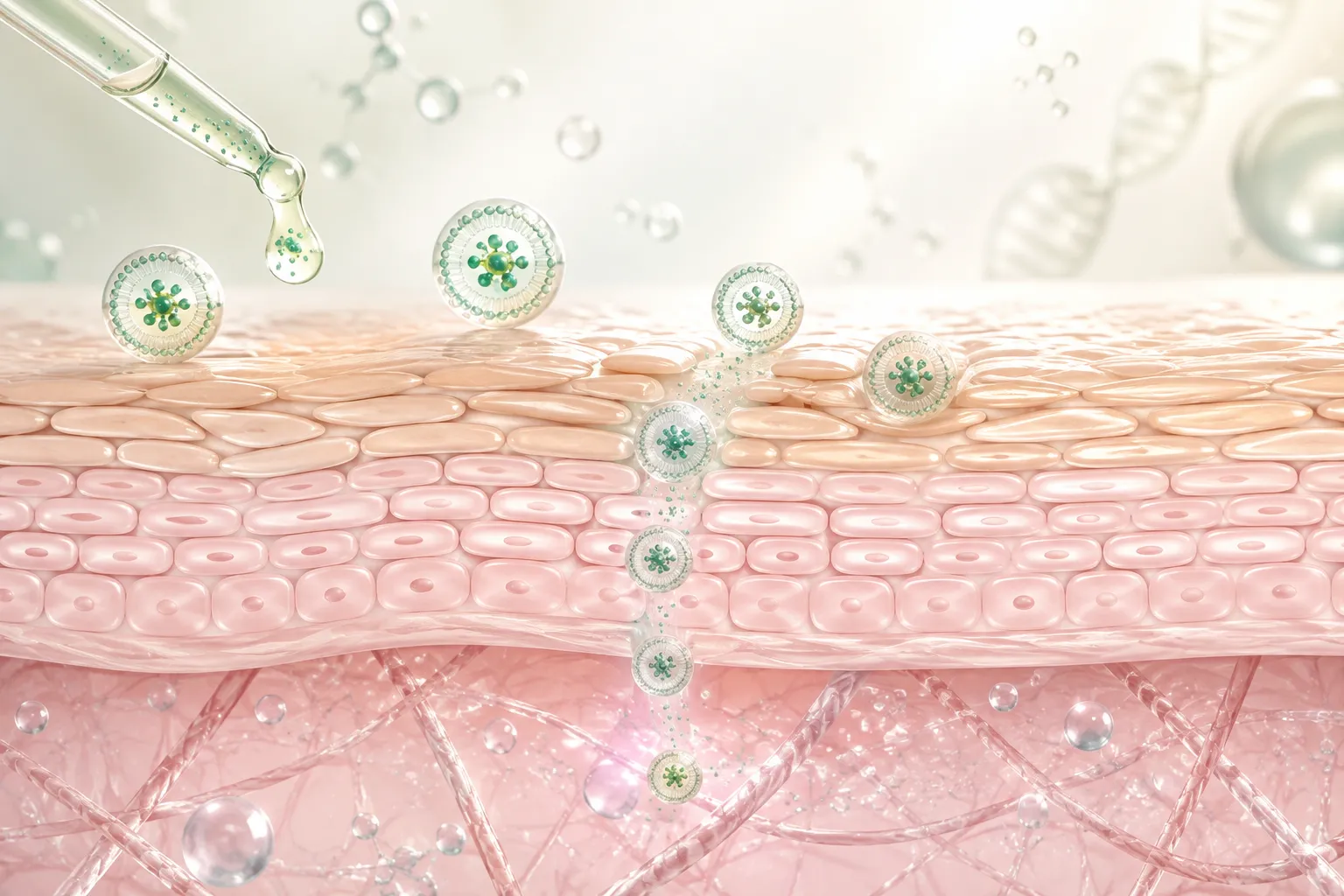
Tiny messengers. Complex science. A new area of skincare research.
Exosomes have become an exciting area of research in modern skincare and aesthetic science. But what exactly are they, how do they communicate with cells, and what could this emerging science mean for skincare?
To understand exosomes, we first need to understand something remarkable about our skin: our cells are constantly communicating.
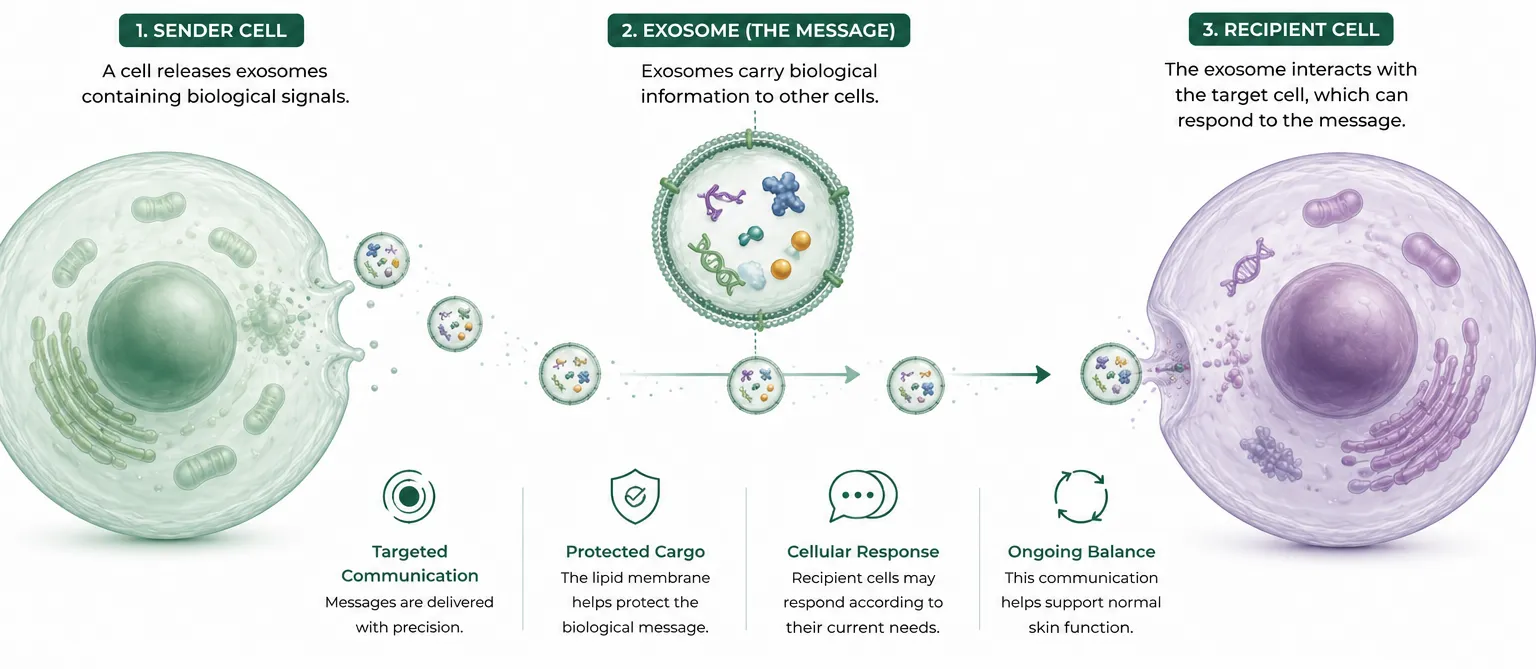
They send and receive biological signals that help coordinate normal processes throughout the body. Exosomes are one of the ways this communication can occur.
What Are Exosomes?
Exosomes are extremely small, membrane-bound particles released by cells. Scientifically, they are generally described as a subtype of extracellular vesicles (EVs).
Think of an exosome as a microscopic envelope carrying a biological message.
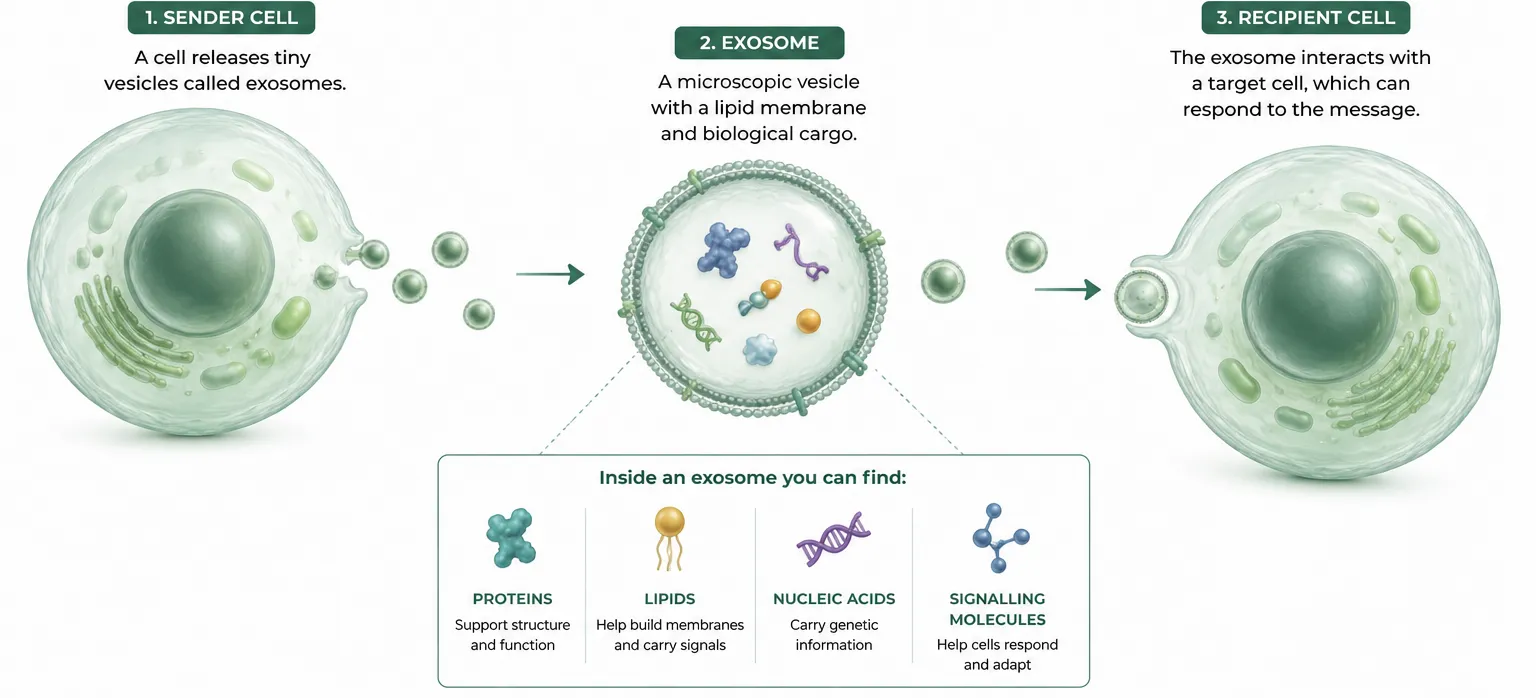
These tiny vesicles can transport different types of biological material, including proteins, lipids and nucleic acids. Their lipid membrane protects this cargo as the vesicle travels between cells.
An exosome is not a cell. Instead, it is part of a sophisticated communication system that allows cells to exchange information.
How Do Exosomes Work?
Imagine two cells trying to communicate.
One cell (the sender cell) releases tiny extracellular vesicles containing biological information. These vesicles can travel through the surrounding environment and interact with another cell (the recipient cell).
The recipient cell can then respond to the signals it receives.
In simple terms:
Sender Cell → Exosome → Biological Message → Recipient Cell
This cell-to-cell communication is one of the reasons exosomes have attracted so much scientific attention.
Researchers are studying extracellular vesicles in many areas of biology, including inflammation, tissue signalling, ageing and regeneration.
However, it is important to distinguish this fascinating biological science from claims made about finished skincare products. Exosome research in topical skincare is still developing, and the performance of a cosmetic formulation depends on much more than simply containing an ingredient described as an exosome.
Exosomes and the Skin Barrier
Our skin is designed to protect us.
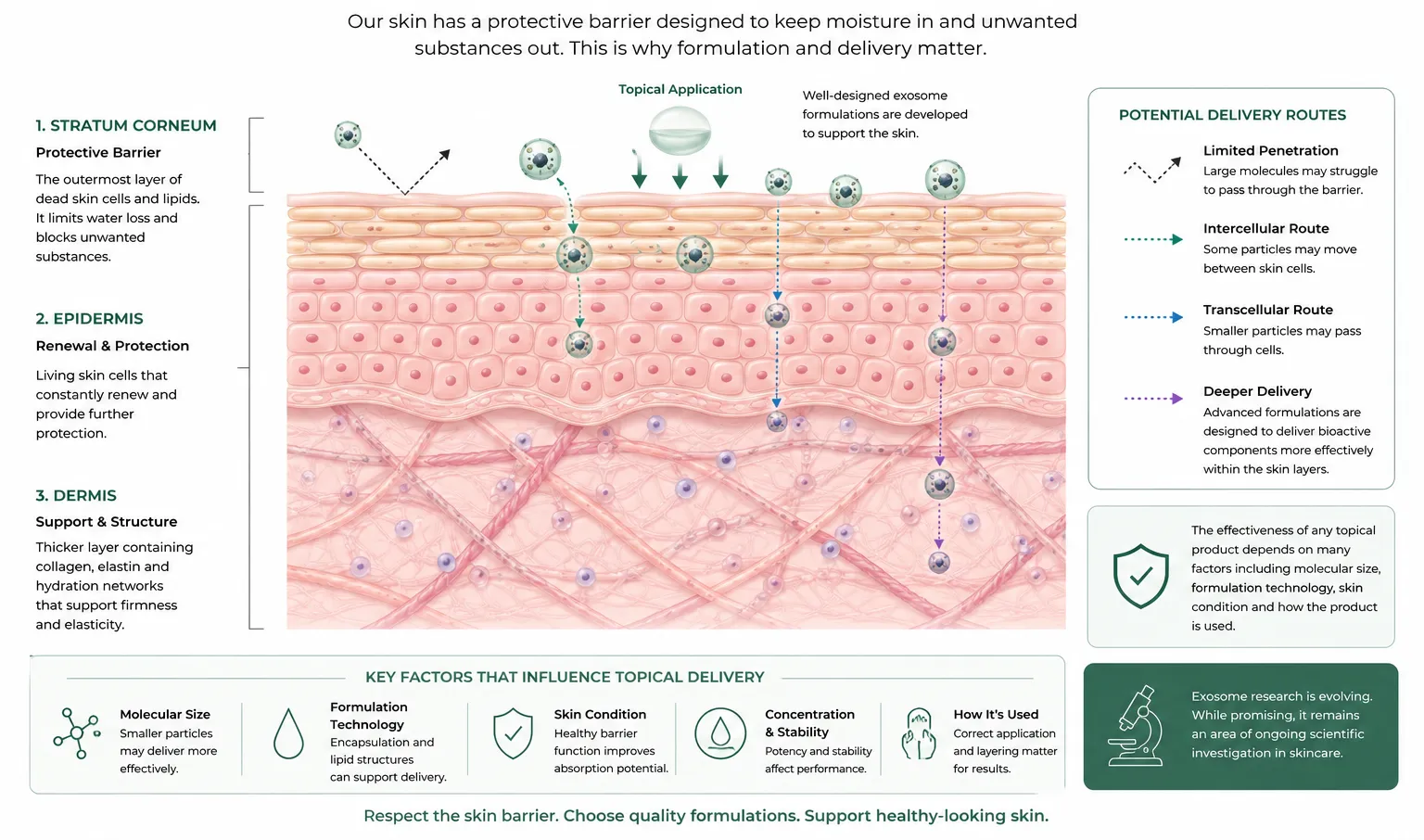
The outermost part of the epidermis, the stratum corneum, forms an important protective barrier. It helps reduce water loss while limiting the entry of unwanted substances from the environment.
This creates one of skincare science's biggest challenges:
How do we deliver beneficial ingredients effectively while respecting the skin's natural barrier?
Not every ingredient applied to the skin automatically travels into its deeper layers. Molecular size, formulation, stability, concentration and the condition of the skin barrier can all influence topical delivery.
Exosome and extracellular-vesicle technologies are being investigated partly because of their microscopic size and lipid-based structure. However, it would be inaccurate to assume that every topical exosome formulation automatically passes through the epidermis and reaches the dermis.
The quality of the formulation and its intended method of use matter.
Why Are Exosomes Being Studied in Skincare?
This is where exosome science becomes particularly interesting.
Researchers are investigating how extracellular vesicles and their signalling cargo may interact with processes associated with skin condition, ageing and recovery.
In cosmetic skincare, the goal is ultimately reflected in what we can see and feel: skin that appears calmer, smoother, better hydrated, more resilient and radiant.
Exosome technology is therefore an exciting emerging area, but it is important to keep it in perspective.
It should not be viewed as a magical ingredient that automatically reverses ageing or repairs damaged skin. The science is evolving, and different exosome sources, manufacturing methods and formulations cannot simply be considered equivalent.
What About Microneedling, IPL and Laser Treatments?
Exosomes are increasingly discussed alongside professional aesthetic procedures such as microneedling, IPL and laser treatments.
While these treatments work in different ways, each is designed to stimulate a controlled response within the skin.
After a professional treatment, the skin may temporarily feel warm, dry, tight or sensitive. Supporting the skin barrier and following appropriate aftercare therefore becomes particularly important.
A carefully selected post-treatment skincare routine may help:
maintain hydration and skin comfort
support the skin's protective barrier
minimise unnecessary irritation, and
complement the recovery period following professional treatment.
The important distinction is that professional post-procedure care is not the same as ordinary daily skincare.
Products used on recently treated or disrupted skin should be appropriate for the procedure and used according to the directions of the treating professional. Not every cosmetic product is suitable for application to freshly micro-needled, lasered or otherwise compromised skin.
Freeze-Dried Exosome Formulations: Why Two Vials?
You may have noticed that some exosome skincare systems look different from an ordinary serum.
Instead of one bottle, they contain a freeze-dried component and a separate activating essence.
Freeze-drying, also called lyophilisation, removes water from a formulation under controlled conditions. It is widely used to help preserve materials that may be less stable when stored for long periods in liquid form.
The dry component is then combined with its activating solution shortly before use.
With the KENTELLE Exosome Essences, the freeze-dried powder and activating essence are mixed together before application and the activated formulation is intended to be used within 24 hours.
This is why correct activation and storage instructions are important.
Four KENTELLE Exosome Essences
Skin is individual, and its needs can change with age, environment, lifestyle and professional treatments. That is why KENTELLE offers four targeted Exosome Essences, each pairing exosome technology with carefully selected botanical and conditioning ingredients to support different skin concerns.
Explore the four formulations below to discover which best suits your skin.
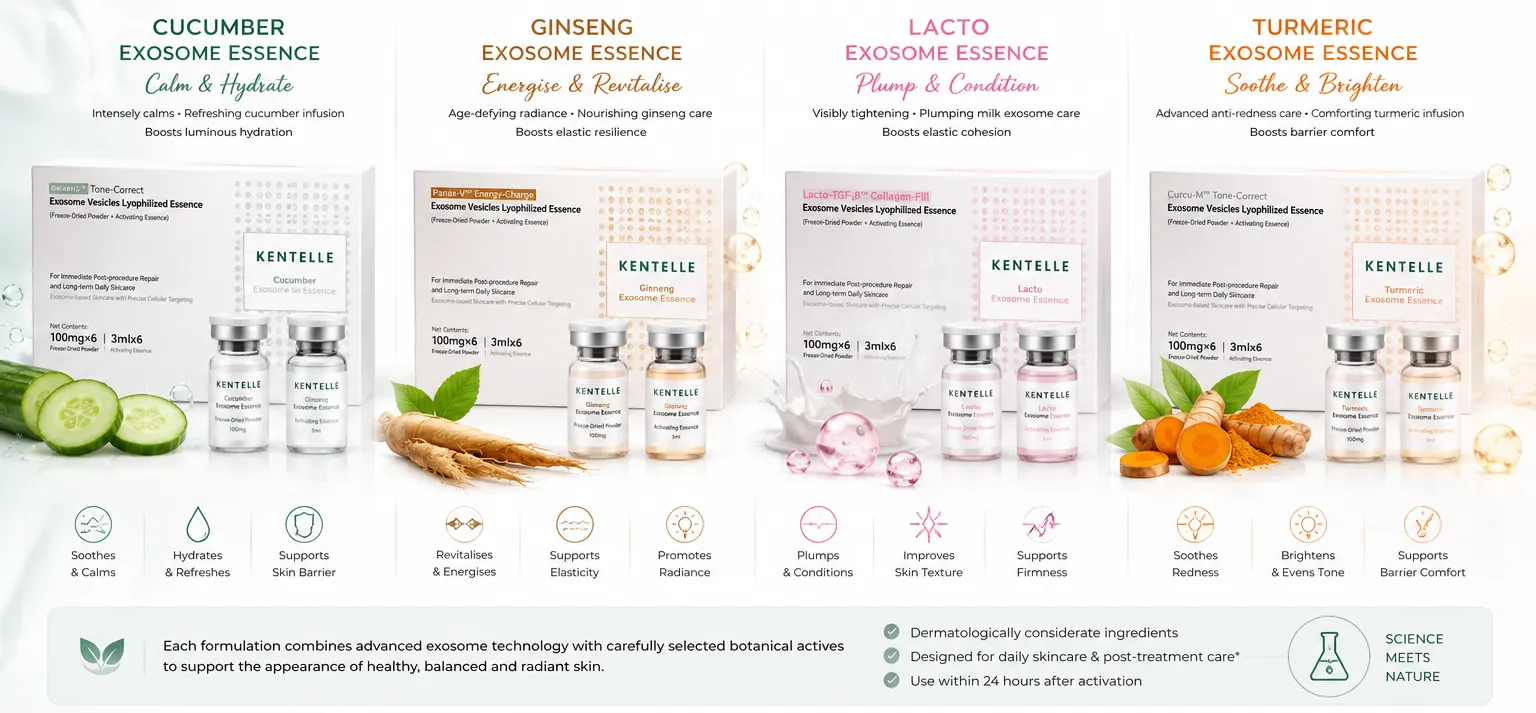
How Are KENTELLE Exosome Essences Used?
KENTELLE Exosome Essences are supplied as a freeze-dried component and a separate activating essence, which are combined before use.
Pour the activating essence into the freeze-dried vial and mix until fully dissolved. Apply the activated essence to clean skin as an early step in your skincare routine, then follow with your appropriate moisturiser. During the day, always finish with broad-spectrum sunscreen.
Once activated, follow the product directions and use within 24 hours.
When incorporating an Exosome Essence around professional treatments such as microneedling, IPL or laser, follow the advice of your qualified skin professional. The appropriate product and timing will depend on the treatment performed and the condition of your skin.
The Future of Exosome Skincare
Exosomes represent an exciting intersection between cell biology and modern formulation science.
What makes them fascinating is not simply their microscopic size, but the biological concept behind them: cells have sophisticated ways of communicating, and extracellular vesicles form part of that communication network.
As research continues, our understanding of how extracellular vesicle technologies can be incorporated into skincare will continue to develop.
For consumers, however, good skincare should never be about chasing the newest scientific term.
It should be about understanding your skin, choosing appropriate formulations and building a routine that works together.
Not sure which Exosome Essence is right for you?
Your skin needs are individual. Take the Kentelle Skin Quiz to discover products and a routine selected around your skin concerns.